














Marketing automation is no longer new.
Most retailers and mall operators we work with already have some form of it in place. Campaigns are scheduled. Segments are defined. Messages go out regularly.
On paper, things look busy.
But in conversations with marketing and CRM teams, a similar question comes up again and again:
“We’re doing a lot so why aren’t we seeing stronger results?”
Activity is not the same as effectiveness
In many cases, automation has simply made it easier to do more of what teams were already doing.
More campaigns.
More reminders.
More promotional pushes.
The tooling is more sophisticated, but the thinking hasn’t shifted very much. Automation is still being used primarily as an execution engine — a faster way to send messages at scale.
That approach works, up to a point.
Eventually, teams hit a ceiling where:
- Engagement starts to flatten
- Customers become harder to reactivate
- Internal effort increases, but impact doesn’t
What’s often missing isn’t content. It’s timing
When we look closer, the issue usually isn’t that messages are poorly written or offers are unattractive.
It’s that they’re not tied closely enough to customer behaviour.
Most automated campaigns are still anchored around:
- Fixed schedules
- Static segments
- Assumptions about intent
But customers don’t operate on campaign calendars.
They act in response to moments – a visit, a purchase, a redemption, or a long period of inactivity.
When automation doesn’t respond to these moments, even well-crafted messages can feel irrelevant.
A quiet shift in how stronger teams approach automation
Some teams have started to rethink what automation is meant to do.
Instead of asking, “What should we send this week?”, the conversation changes to:
- “What just happened?”
- “What didn’t happen, but should have?”
- “What do we need to respond to now, not later?”
In practice, this means:
- Fewer blanket campaigns
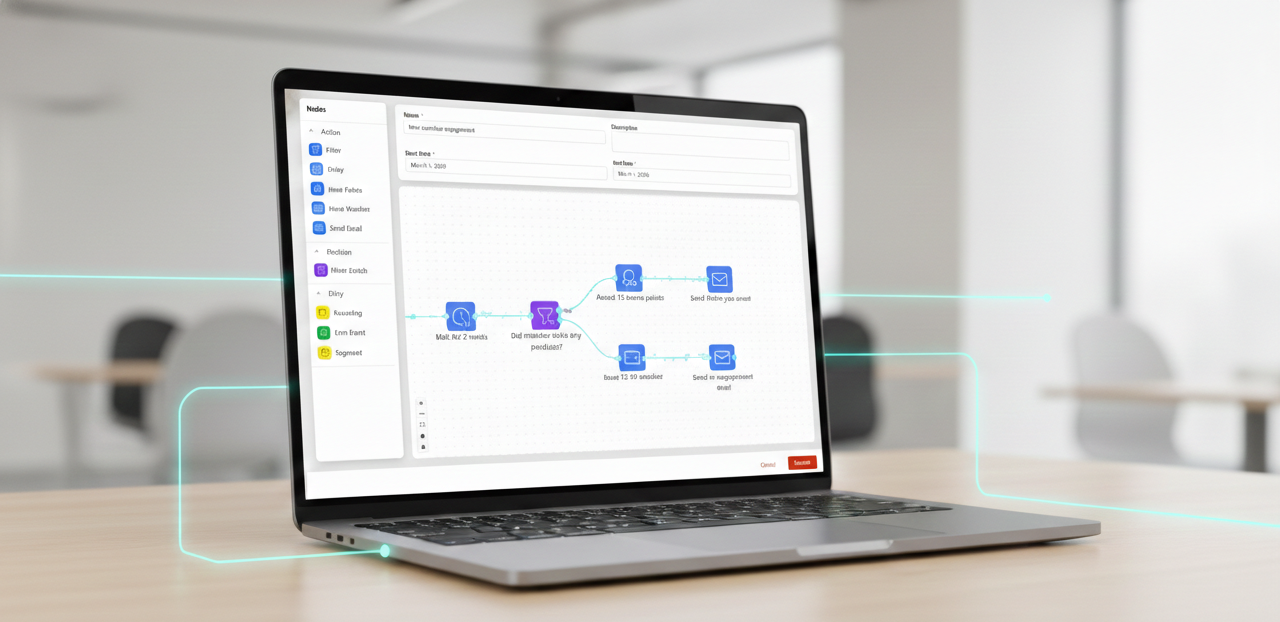
- More behaviour-based triggers
- More attention paid to suppression and prioritisation
The goal isn’t more automation.
It’s more appropriate automation.
Why this matters operationally, not just from a marketing lens
There’s also a practical reality teams are dealing with.
Frontline staff, operations teams, and even tenants increasingly feel the downstream effects of poorly timed or overly frequent messaging especially when promotions, vouchers, or loyalty mechanics are involved.
When automation is disconnected from what’s happening on the ground, it creates friction internally, not just for customers.
Better automation reduces that friction.
It aligns marketing activity with actual customer and operational behaviour.
A more grounded way to think about marketing automation
The most effective setups we’ve seen don’t try to automate everything.
They focus on:
- Responding to meaningful customer actions
- Reducing noise rather than increasing output
- Giving teams clarity on why something is being triggered
Automation becomes a support system for decision-making, not just a delivery mechanism.
Final thought
Most organisations don’t need more marketing automation.
They need automation that listens better.
And that shift from pushing messages to responding to behaviour is often where the real gains start to show.
Like to experience that shift for your team? Let’s talk.
