

















Introduction
In today’s fast-evolving retail landscape, the line between online and offline shopping has all but disappeared. Customers browse on their mobile devices, research products before stepping into a store, and expect frictionless transitions across every touchpoint. For retailers in Singapore, this shift is no longer a trend but the baseline standard of modern commerce.
An effective omni channel strategy in retail ensures every interaction feels connected, consistent, and relevant. When brands unify data, streamline journeys, and deliver personalised moments at scale, they strengthen loyalty and position themselves for sustainable growth.
This guide explores how retailers can design and implement a connected omni-channel experience, one that transforms every channel into a meaningful opportunity for engagement, conversion, and long-term customer value.
Key Takeaways:
- What defines an effective omni channel strategy in retail and why is it essential for today’s customers?
It unifies online and offline touchpoints into one connected ecosystem, ensuring customers enjoy a seamless, consistent experience across every channel.
- How can retailers integrate data, systems, and channels to create a seamless customer journey?
By connecting CRM, POS, e-commerce, loyalty, and marketing platforms, retailers ensure data flows smoothly and every interaction reflects updated customer insights.
- Which technologies, such as CRM, CDP, loyalty tools, and automation, play the biggest role in building a connected ecosystem?
CRM systems, customer engagement platforms, CDPs, and loyalty technologies provide the foundation for personalisation, unified data, and automated engagement at scale.
- What steps help retailers personalise experiences responsibly without compromising customer trust?
Using data ethically, communicating transparently, and tailoring offers based on genuine preferences help retailers deliver valuable personalisation without overstepping privacy boundaries.
- How can staff training complement digital tools to deliver a consistent omni-channel experience?
Well-trained teams use CRM insights, AI-supported tools, and cross-channel knowledge to provide informed, personalised service that aligns with the brand’s digital capabilities.
- Which KPIs and analytics should retailers track to measure and optimise omni-channel performance over time?
Metrics such as retention, conversion, engagement, AOV, CLV, and loyalty participation, paired with predictive analytics, show how effectively customers move between channels.
What Is an Omni Channel Strategy and Why Does It Matter in Retail?
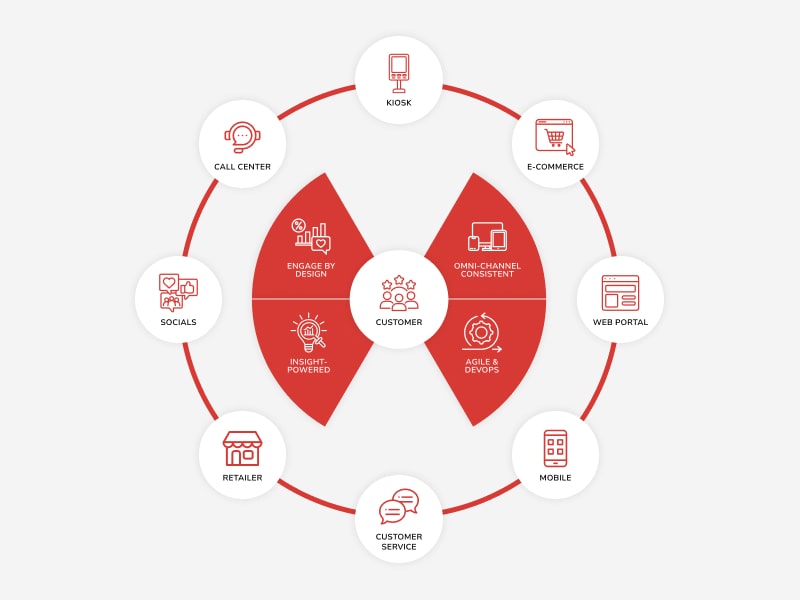
An omni channel strategy in retail brings every customer touchpoint together into one integrated ecosystem. Instead of operating physical stores, e-commerce platforms, mobile apps, loyalty programmes, and social channels as separate environments, it unifies them so customers experience a single, connected journey.
This approach ensures that data, content, and brand messaging flow seamlessly from one channel to the next. Whether shoppers are browsing on their phones, speaking to an in-store associate, or completing a purchase online, they encounter the same level of personalisation, consistency, and convenience.
For retail businesses in Singapore, this creates meaningful advantages. A shopper might discover a product on social media, check availability on the website, reserve an item through a mobile app, and complete the purchase in-store, earning rewards and receiving tailored recommendations along the way. Every engagement is captured within the same ecosystem, making it possible to track behaviour, understand preferences, and respond with precision.
By aggregating cross-channel data into a Customer Data Platform (CDP), retailers gain a holistic, real-time view of each customer’s browsing patterns and purchasing behaviour. This empowers brands to personalise actions, strengthen loyalty, and make smarter decisions that drive measurable business impact.
How Can Retailers Bridge the Gap Between Online and Offline Channels?
3.1. What’s Holding Retailers Back from Going Fully Omni-Channel?
For many brands, the main barrier to an effective omni channel strategy in retail is the presence of siloed systems. When online and in-store operations operate separately, retailers struggle to deliver a unified journey. This often results in friction, loyalty points earned online cannot be redeemed in-store, or in-store purchases fail to sync back to the central CRM.
These fragmented experiences weaken the impact of an omni channel strategy in retail, making it difficult to understand the customer’s full journey or provide consistent engagement. The first step is breaking down these silos by integrating POS, CRM, e-commerce, and loyalty platforms, ensuring data moves freely across every channel.
3.2. How Can Data Integration Improve Customer Engagement?

Data integration sits at the heart of every successful omni channel strategy in retail. When CRM, marketing, and sales systems are connected, retailers gain real-time visibility into customer preferences, purchases, and interactions. This enables highly personalised engagement, such as recommending products based on past behaviour or sending timely alerts when a preferred item is back in stock.
Technologies like CRM automation, marketing automation, and Customer Data Platforms (CDPs) help retailers act on insights instantly. The result is faster response times, more accurate segmentation, and campaigns that feel relevant across both digital and physical touchpoints.
3.3. How Do Loyalty Programmes Strengthen Omni-Channel Experiences?

A strong loyalty programme plays an essential role in reinforcing an omni channel strategy in retail. With the support of the loyalty program software that retailers in Singapore rely on, customers can earn and redeem points across multiple channels, whether they shop in-store, through an app, or on an e-commerce site. These systems unify every interaction, ensuring rewards, offers, and benefits follow the customer wherever they go.
Beyond convenience, these programmes offer a continuous flow of behavioural data. Each interaction reveals customer preferences, enabling retailers to shape more targeted engagements, reward repeat behaviour, and encourage long-term loyalty rooted in a cohesive omni-channel ecosystem, highlighting the importance of loyalty in omni channel strategies.
What Technologies Power an Effective Omni Channel Retail Strategy?
4.1. Why Is CRM the Core of Omni-Channel Retail?
At the centre of every effective omni channel strategy in retail is a robust CRM system that acts as the single source of truth for all customer data. Retailers in Singapore benefit from a CRM solution that connects purchase histories, preferences, engagement patterns, and feedback across channels to ensure every touchpoint reflects accurate and updated information.
With CRM automation, businesses can automatically enrich customer profiles, trigger personalised campaigns, and monitor engagement without manual effort. When paired with a CDP, retailers can aggregate insights not only from transactional data but also from browsing behaviour, campaign interactions, and real-time customer signals. AI-driven profiling further enhances this capability by identifying behavioural clusters, predicting intent, and surfacing next-best actions, forming a strong foundation for data-driven marketing.
This level of intelligence strengthens an omni channel strategy in retail, ensuring every interaction, whether online or in-store, feels timely, relevant, and informed by a complete understanding of the customer.
4.2. What Role Does a Customer Engagement Platform Play?
A customer engagement platform serves as a vital layer within any omni channel strategy in retail, bringing CRM, marketing systems, and loyalty tools together into one automated engine. Acting as a central marketing automation tool, it enables brands to orchestrate journeys such as welcome series, re-engagement flows, win-back campaigns, and personalised birthday rewards.
By leveraging CDP insights, the platform tailors communication to different customer segments, ensuring each message reflects individual preferences and current behaviour. Unified engagement data also allows retailers to evaluate campaign performance across multiple channels, email, push notifications, in-app messaging, or social, helping them refine strategy and strengthen overall retail customer experience.
This ecosystem supports businesses that want to scale faster, deliver real-time communication, and maintain consistent personalisation across the entire customer lifecycle.
4.3. How Can Marketing Automation Create Consistent Brand Messaging?
Marketing automation adds structure and reliability to an omni channel strategy in retail by managing and synchronising communication across email, SMS, mobile apps, and social platforms. It ensures consistency in tone, timing, and content, regardless of how customers choose to engage.
Marketers can build targeted campaigns using A/B testing, segmentation, and dynamic content tools designed to adapt messages to specific behaviour or interests. This creates a cohesive brand voice while still delivering personalised value at scale.
When integrated with membership CRM, marketing automation ensures that member tiers, benefits, and offers are reflected accurately in every communication channel. It also pairs seamlessly with membership and loyalty solutions to deliver points updates, exclusive previews, and targeted incentives.
By maintaining alignment across all touchpoints, retailers strengthen recognition, increase trust, and enhance customer satisfaction, key outcomes for businesses looking to grow loyalty through unified engagement.
How to Design a Customer Journey That Feels Seamless Across Channels
5.1. How Do You Map Out the Omni-Channel Customer Journey?
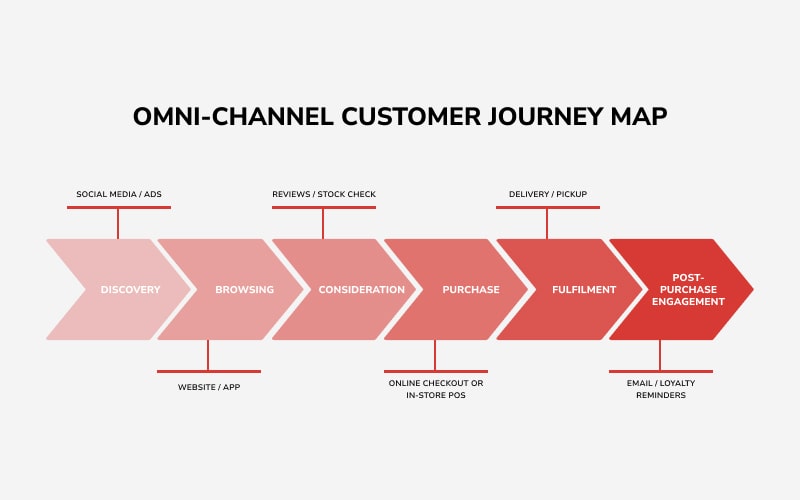
Designing a seamless journey begins with understanding every moment a customer interacts with your brand. Start by identifying all possible touchpoints, from initial discovery and browsing to checkout, fulfilment, and post-purchase engagement. Mapping these moments visually helps retailers see how customers transition between platforms and where friction or drop-offs commonly occur.
For an effective omni channel strategy in retail, continuity is essential. A shopper who browses products online should find the same items saved in their mobile app, receive timely reminders via email, or be able to complete the purchase in-store without having to start over. When these journeys feel connected, customers experience the brand as one unified ecosystem instead of disjointed channels.
5.2. How Do Retailers Personalise Experiences Without Being Intrusive?
Personalisation must be meaningful, transparent, and value-driven. Retailers should use data ethically, communicate how information is used, and offer customers control over their preferences. Delivering exclusive promotions, early access to sales, or relevant product recommendations based on genuine interests ensures that personalisation feels helpful rather than overwhelming.
A strong omni channel strategy in retail balances automation with respect for privacy. Membership systems and engagement tools help retailers tailor messages to each customer segment while preserving consent and maintaining trust. Retailers who achieve this balance can deliver personalisation that feels authentic, intuitive, and aligned with shopper expectations.
5.3. How Can Staff Training Support the Omni-Channel Experience?
Even the most advanced retail technologies require well-prepared teams to bring the experience to life. Sales associates should have access to up-to-date customer profiles, enabling them to recognise returning shoppers and provide relevant recommendations or support. This human layer reinforces the value of a connected brand experience.
AI can further support staff by handling heavy lifting such as segmentation, analysis, and automated content generation, allowing frontline teams to focus on meaningful interactions. Training should also equip support staff to handle cross-channel requests, such as processing online returns in-store or assisting with orders placed via mobile apps.
When staff combine digital insights with warm, consistent service, they complete the omni-channel loop, bringing together the strengths of technology and human connection. This synergy forms one of the most powerful elements of an omni channel strategy in retail.
What Metrics Define a Successful Omni Channel Strategy in Retail?
6.1. Which KPIs Should Retailers Track?
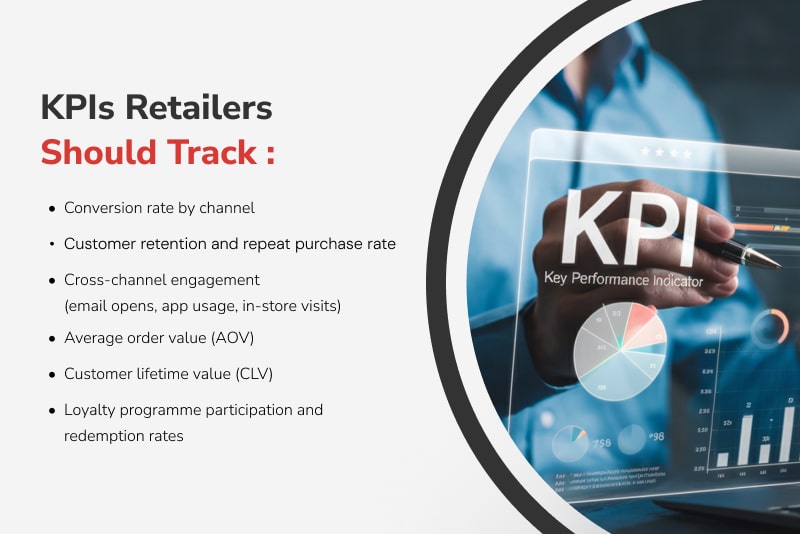
Measuring the effectiveness of an omni channel strategy in retail requires a clear understanding of how customers behave across different touchpoints. The following KPIs provide meaningful insight into both performance and customer movement:
- Conversion rate by channel
- Customer retention and repeat purchase rate
- Cross-channel engagement, including email opens, app usage, and in-store visits
- Average order value (AOV) and customer lifetime value (CLV)
- Loyalty programme participation and redemption rates
Retailers can also rely on rewards management software to analyse redemption patterns, identify high-performing incentives, and refine reward strategies that drive stronger cross-channel engagement.
Together, these metrics reveal not only sales outcomes but also how smoothly customers transition between platforms, a core indicator of omni-channel maturity and long-term brand loyalty.
6.2. How Can Data Analytics Continuously Improve the Strategy?
Data analytics plays a crucial role in refining an omni channel strategy in retail over time. Retailers can evaluate which channels generate the strongest engagement, highest-value customers, and most efficient conversions. With predictive analytics, brands can forecast demand, optimise inventory allocation, and adjust marketing investments more confidently.
The ability to test campaigns, analyse performance, and refine targeting in real time enables retailers to remain agile. As customer behaviour evolves, analytics ensures that omni-channel strategies remain responsive, relevant, and aligned with shifting expectations across Singapore’s fast-moving retail landscape.
Frequently Asked Questions
1. How is omni channel different from multi channel retailing?
Multi channel retailing uses multiple platforms (like online stores, apps, and outlets) but treats them separately. Omni channel retailing connects these platforms into one cohesive system, allowing customers to move effortlessly between them while keeping their data, rewards, and preferences intact.
2. How can retailers measure the success of their omni channel strategy?
Retailers should track metrics such as conversion rate, repeat purchase rate, customer retention, cross-channel engagement, and loyalty programme participation. These indicators show how effectively customers interact with the brand and move between channels.
3. How can CRM and loyalty solutions support an omni channel retail strategy?
CRM and loyalty solutions connect customer data from both online and offline channels, allowing retailers to deliver consistent rewards, offers, and experiences. By integrating these systems, retailers can track customer behaviour in real time, personalise engagement, and strengthen relationships across every stage of the shopping journey.
Conclusion
An omni channel strategy in retail is no longer optional; it has become essential for meeting the expectations of today’s connected customers. By unifying systems, integrating data, and leveraging intelligent automation, retailers can deliver a seamless journey across every channel and touchpoint.
Whether online or in-store, each interaction contributes to a larger, cohesive experience that strengthens customer loyalty, deepens trust, and drives sustainable growth. Retailers that invest in building a connected ecosystem today will be well-positioned to thrive in a competitive, fast-evolving retail environment shaped by digital behaviour and rising consumer expectations.
Looking to deliver a seamless journey across every touchpoint? Speak with the Ascentis team to discover how our solutions can help you design an integrated, customer-first omni-channel experience.
