

















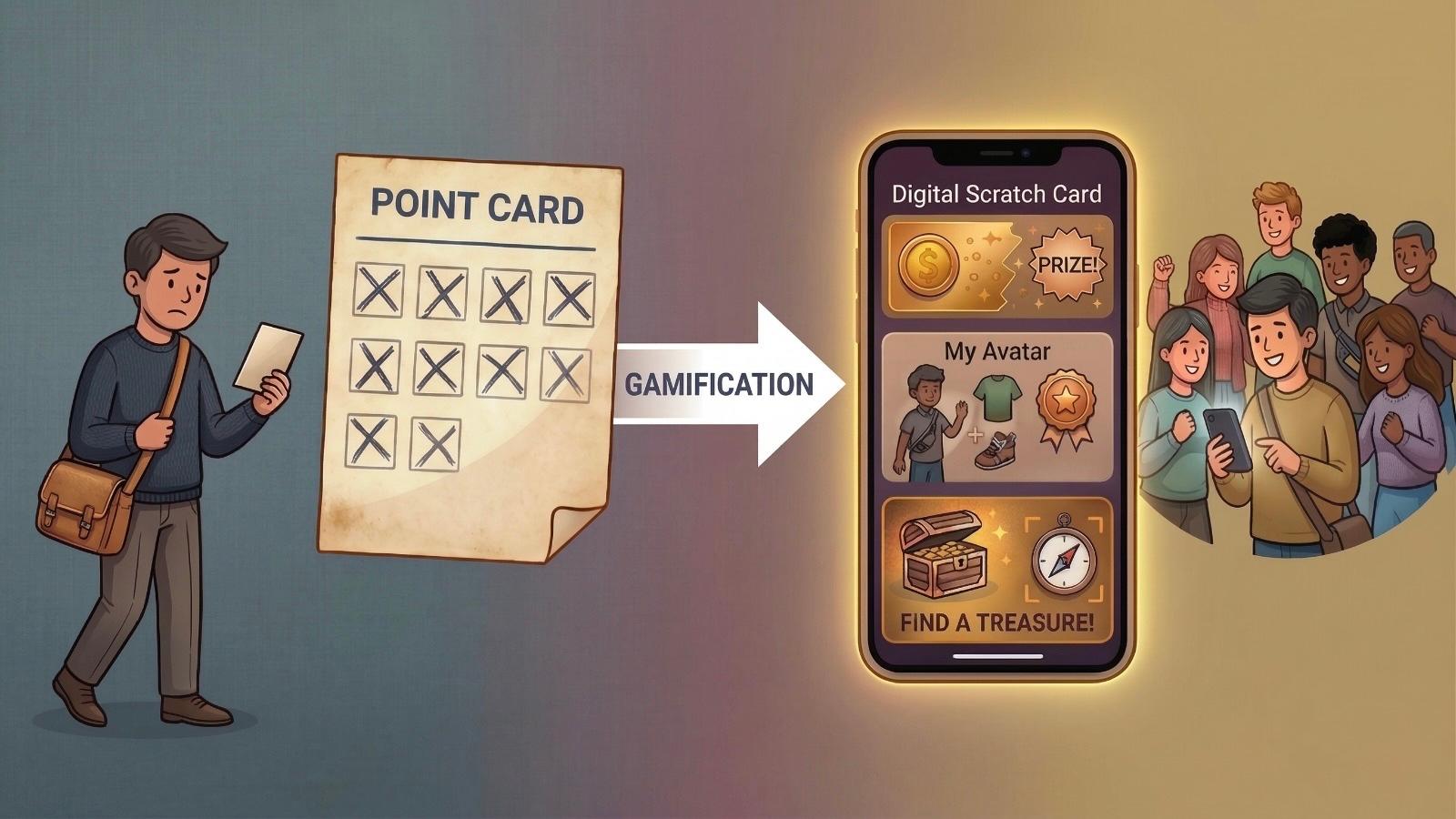
How gamification transforms passive loyalty programs into active member experiences
Your loyalty program has 100,000 active members. Points accumulate. Vouchers get redeemed. On paper, everything looks healthy.
But here’s the uncomfortable question: are your members actually engaged?
For most loyalty programs, the answer is no. Members check their balance occasionally, use a voucher when prompted, and forget the program exists until the next discount arrives. The relationship is transactional, not emotional. And transactional relationships are fragile. The moment a competitor offers a better deal, your members are gone.
The Engagement Gap
Traditional loyalty programs were built for a different era. Earn points, reach a threshold, redeem a reward. Rinse, repeat. This model works for frequency. Customers come back but it doesn’t create connection.
Data shows that while many companies have some form of loyalty program, less than a third of consumers feel emotionally connected to the brands they’re loyal to. Members participate out of habit or economic incentive, not genuine affinity.
What’s missing? The emotional layer. The feeling of progress, achievement, discovery. The fun.
Enter Gamification: When Loyalty Gets Playful
Gamification isn’t a new concept. Starbucks has been doing it for years with their star collection system. But until recently, sophisticated gamification mechanics were only accessible to enterprise brands with massive technology budgets.
That’s changing. Modern loyalty platforms now offer plug-and-play gamification modules that transform passive point collection into active experiences—scratch cards, stamp collection, avatar building, even augmented reality treasure hunts.
The difference? Instead of waiting to accumulate enough points, members actively participate. They scratch digital cards to reveal prizes. They collect stamps with visible progress toward rewards. They build and customize avatars. They hunt for AR markers at physical locations.
Four Gamification Mechanics That Actually Work
1. Digital Scratch Cards: Instant Gratification
Remember the excitement of scratching a lottery ticket? Digital scratch cards bring that same dopamine hit to loyalty programs. Members scratch to reveal instant prizes—discounts, bonus points, exclusive offers.
The magic is in the reveal. Unlike static rewards that require waiting and accumulation, scratch cards deliver immediate feedback. This makes them perfect for seasonal campaigns where you need to generate buzz quickly.
2. Digital Stamp Cards: Progress Made Visible
Stamp cards tap into our psychological need for completion. You’ve experienced this yourself—buy four coffees, get the fifth free. That half-completed card in your wallet? It’s pulling you back.
Digital stamp cards amplify this effect. Members see exactly how many stamps they need. They preview the next reward. Progress is visible, tangible, motivating. And unlike physical cards, digital stamps work across all outlets, never get lost, and automatically renew upon completion.
For businesses, stamp cards solve a specific problem: increasing visit frequency. A regional F&B chain we work with deployed stamp cards to move customers from monthly visits to weekly visits. Within three months, average visit frequency doubled.
3. Avatar & Collectibles: Building Connection Through Personalization
Why do people spend hours customizing video game characters? Because personalization creates ownership. When you’ve built something, you’re invested.
Avatar-based loyalty brings this principle to retail. Members build and customize digital characters, unlocking exclusive items through purchases and achievements. For fashion and lifestyle brands, this creates a powerful bridge between digital engagement and physical commerce.
4. AR Treasure Hunts: Turning Shopping Into Adventure
Shopping malls face a consistent challenge: how do you drive foot traffic to all zones, not just anchor tenants? Augmented reality treasure hunts offer an elegant solution.
Members use their phones to hunt for AR markers placed throughout the mall. Find a marker, unlock a reward. Complete a quest series, earn bigger prizes. Suddenly, shopping becomes an experience, not a transaction.
For mall management, this solves multiple problems at once—driving traffic to underperforming zones, creating social media moments, extending dwell time, and delivering measurable foot traffic to specific tenants.
The Business Case: Why Gamification Drives Results
Gamification isn’t just fun. It delivers measurable business outcomes:
Increased Visit Frequency: Members with stamp cards visit 2-3x more often than passive members. Progress toward completion drives return visits.
Higher Transaction Values: Mission-based mechanics (“Spend $50 to unlock a scratch card”) naturally increase basket size. Members adjust purchasing behaviour to qualify for rewards.
Better Data Collection: Interactive experiences generate behavioural data that passive programs miss. You learn what motivates members, what mechanics drive engagement, which rewards matter.
Organic Social Sharing: Gamified experiences are inherently shareable. Members screenshot their completed stamp cards, show off their avatar collections, post about treasure hunt discoveries. Marketing reach extends beyond paid channels.
Flexible Cost Structure: Modern gamification modules operate on campaign-based pricing. Run a Christmas scratch card campaign in December, pause it in January. Pay only when active. Perfect for seasonal retailers and tactical campaigns.
Who Should Consider Gamification?
Gamification isn’t right for every loyalty program. It works best when:
You already have decent member engagement: Gamification amplifies existing programs. If your base loyalty structure is broken, fix that first.
Your audience skews younger: Gen Z and Millennials expect interactive, mobile-first experiences. Gamification meets this expectation naturally.
You run seasonal campaigns: Scratch cards and themed stamp cards excel at creating short-term buzz around holidays, product launches, or seasonal promotions.
You have multiple physical locations: Stamp cards and AR treasure hunts work particularly well for multi-outlet retailers, F&B chains, and shopping malls.
You want to differentiate: In crowded markets where everyone offers discounts, gamified experiences create memorable differentiation.
The Technical Reality: Easier Than You Think
One common objection: “This sounds complicated to implement.”
It’s not. Modern gamification modules are built as mobile-responsive web pages (H5 pages) that work with or without dedicated apps. Integration is straightforward—connect to your existing CRM, configure your mechanics, launch.
Campaign management happens through content management systems. Marketing teams can adjust colours, icons, reward structures, and timing without developer involvement. Need to run multiple concurrent campaigns? The system handles it. Running seasonal campaigns? Activate when needed, pause when not.
The barrier to entry has dropped dramatically. What required enterprise budgets three years ago is now accessible to mid-market brands.
From Transactional to Emotional
The future of loyalty isn’t more points or bigger discounts. It’s creating experiences that members actually want to engage with.
Gamification transforms passive programs into active experiences. Members don’t just collect points—they scratch cards, complete stamp collections, build avatars, hunt for treasures. The relationship shifts from transactional to emotional.
And emotional loyalty? That’s the kind that lasts. It’s the difference between a customer who stays because of your discount and one who stays because they’re genuinely connected to your brand.
The technology is ready. The question is: are you ready to make loyalty fun again?
━━━
About Ascentis
Ascentis helps brands build loyalty programs that members actually engage with. Our Emotional Loyalty Stampcard module brings gamification mechanics—scratch cards, stamp collection, avatar building, and AR experiences—to loyalty programs across retail, F&B, and shopping mall sectors throughout Asia Pacific.
Want to explore how gamification could work for your loyalty program? Let’s talk.
